top of page
paper

THE WISDOM OF THE BEATLES

Be the first to be inspired by the most iconic band of our generation.
Untitled_edited_edited.jpg

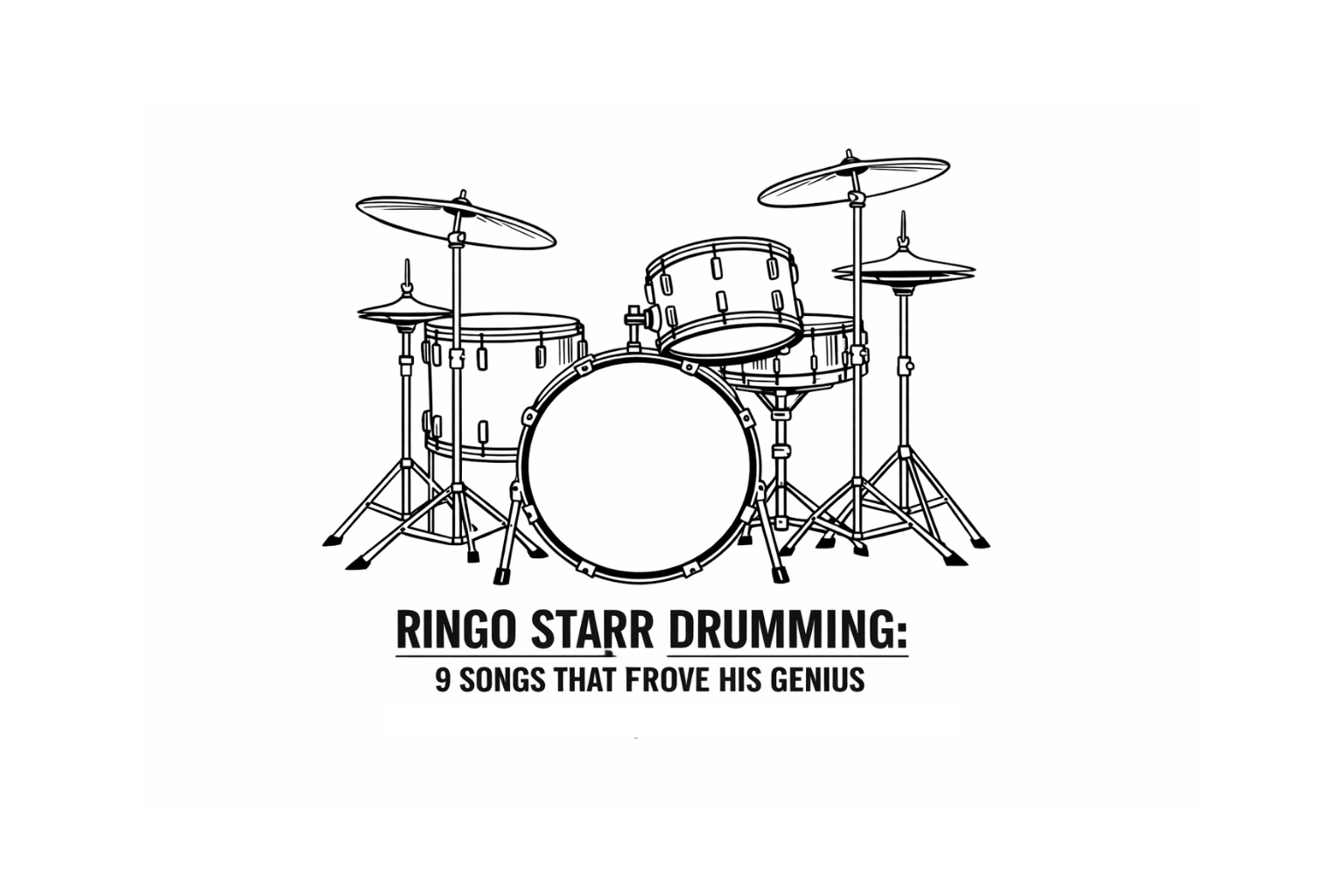
RINGO STARR DRUMMING: 9 SONGS THAT PROVE HIS GENIUS

  • 3 days ago
  • 6 min read

Was Ringo a great drummer? Dan asks a question Beatles fans have debated for decades. Forget the skeptics. Let the music speak. These nine tracks showcase Ringo Starr drumming at its finest, proving why he wasn't just good. He was essential to the Beatles' sound.


Minimalist black and white line art showing a vintage drum kit with the text "Ringo Starr Drumming: 9 Songs That Prove His Genius" in bold sans-serif typography.

1. Rain (1966)

The B-side that Ringo himself calls his best work. Rain features slowed-down drum tracks recorded at Abbey Road Studios in April 1966, creating a hypnotic pulse that anchors John's psychedelic lyrics. The Beatles recorded the basic track fast, then slowed the tape for final playback, giving the song its distinctive drugged groove. Ringo's performance on this track pioneered techniques that influenced rock drumming for decades.

Songwriter credit: Lennon–McCartney, 1966

Released May 30, 1966 (US) as B-side to "Paperback Writer." The single reached #23 on Billboard Hot 100 despite being a flip side.

Leadership takeaway: Sometimes the foundation work is the genius. Ringo's steady, inventive patterns let John and Paul's experimental visions soar.


2. Come Together (1969)

The opener to Abbey Road features Ringo's favorite Beatles song, as he revealed in a 2021 interview. Recorded July 21, 1969, at Abbey Road, the track showcases military flourishes on hi-hat that Paul suggested would create a "swampy bass-and-drums vibe." The result hit #1 on Billboard Hot 100 for one week starting November 29, 1969.

Songwriter credit: Lennon–McCartney, 1969

Paul's iconic bass line gets the glory, but Ringo's minimalist approach creates the pocket that makes the groove stick. Less became more.

Leadership takeaway: Know when to hold back. The best team members understand restraint creates space for others to shine.


3. A Day in the Life (1967)

Sgt. Pepper's masterpiece finale features Ringo's steady timekeeping across the song's shifting tempos and massive orchestral crescendos. Recorded January through February 1967 at Abbey Road, the track required precise drumming to anchor the Beatles' most ambitious studio creation. The song was released May 26, 1967 (UK) on Sgt. Pepper and was banned by BBC until March 1972 for alleged drug references.

Songwriter credit: Lennon–McCartney, 1967

Ringo holds together a song that could have fallen apart. His drums provide the heartbeat during the orchestral chaos and the final piano chord's 42-second sustain.

Leadership takeaway: Great teams need someone who stays steady when chaos hits. Ringo never wavered, even during the avant-garde experiments.


4. Ticket to Ride (1965)

John called this "heavy for then." Recorded February 15, 1965, the song became the Beatles' seventh consecutive UK #1, topping charts for three weeks starting April 15. It peaked at #1 on Billboard Hot 100 on May 22, 1965. Ringo's stuttering drum pattern was unlike anything in pop music at the time.

Songwriter credit: Lennon–McCartney, 1965

The droning guitar gets attention, but listen to those floor tom rolls. Ringo created a rhythmic intensity that pushed the Beatles toward heavier sounds.

Leadership takeaway: Innovation often comes from the quiet ones. Ringo's drum approach on this track signaled the Beatles were ready to evolve.


5. In My Life (1965)

One of John's finest songs features Ringo's subtle, tasteful drumwork throughout. Recorded October 18 and 22, 1965, at Abbey Road during the Rubber Soul sessions, the track showcases restraint. Released December 3, 1965 (UK), the song ranked #23 on Rolling Stone's "500 Greatest Songs of All Time."

Songwriter credit: Lennon–McCartney, 1965

George Martin's sped-up harpsichord solo gets the spotlight, but Ringo's understated patterns let the emotion breathe. No flash. Just feel.

Leadership takeaway: The best support doesn't draw attention to itself. Know when to serve the song, not the spotlight.


6. Something (1969)

George's masterpiece, the only Beatles #1 not written by Lennon-McCartney. Recorded throughout Abbey Road sessions starting February 1969, the track features Ringo's tasteful fills and Frank Sinatra's praise. Released October 6, 1969 (US) as double A-side with "Come Together," it topped Billboard Hot 100 for one week on November 29, 1969.

Songwriter credit: Harrison, 1969

Ringo's cymbal work during the bridge provides the "golden thunder" that complements George's soaring guitar solo. Precision without overplaying.

Leadership takeaway: Recognize when a teammate steps into the spotlight. Ringo supported George's shining moment without ego.


7. Getting Better (1967)

Paul's optimistic melody meets John's dark reality check on this Sgt. Pepper track. Recorded March 9-23, 1967, at Abbey Road (famously during the session where John accidentally took LSD), the song features Ringo's congas and driving rhythms. Released May 26, 1967 (UK) on Sgt. Pepper.

Songwriter credit: Lennon–McCartney, 1967

The congas and handclaps create layers of percussion that push the song forward. Ringo's multi-instrumental approach added dimension to the Beatles' sound.

Leadership takeaway: Versatility matters. The best team members adapt to what the moment needs, not what they always do.


8. Everybody's Got Something to Hide Except for Me and My Monkey (1968)

The White Album rocker with the longest Beatles song title. Recorded June 26-July 23, 1968, at Abbey Road, it captures the Beatles at their rawest. Released November 22, 1968 (UK) on the White Album. The performance ranks among their most spirited of 1968, alongside "Helter Skelter" and "Hey Bulldog."

Songwriter credit: Lennon–McCartney, 1968

Ringo's pounding, compressed drums drove this two-minute explosion of energy. Paul rang a fireman's bell because the guitars were too loud to compete with.

Leadership takeaway: Match the energy of the room. Ringo understood when to hold back and when to unleash raw power.


9. You Won't See Me (1965)

Paul's heartbreak over Jane Asher becomes Motown-flavored pop on Rubber Soul's closing track. Recorded during a marathon 13-hour session on November 11, 1965, it was completed in just two takes. Released December 3, 1965 (UK), it was the Beatles' longest track to date at 3:22.

Songwriter credit: Lennon–McCartney, 1965

Ringo's hi-hat overdubs add rhythmic accents throughout, showing his attention to detail even at 4 AM during the final Rubber Soul session.

Leadership takeaway: Stay focused when the deadline hits. Ringo delivered quality work under intense pressure.


LISTEN & LEARN

Hear Ringo Starr drumming in action:


MINI-FAQ

What makes Ringo Starr drumming special?

Ringo Starr drumming stands out for its creativity, precision, and service to the song. He never overplayed, choosing instead to craft rhythms that enhanced the Beatles' melodies and arrangements. Songs like "Rain" showcase his technical innovation, while tracks like "In My Life" demonstrate his restraint. His unique left-handed setup on a right-handed kit created distinctive fills that became iconic signatures of the Beatles' sound.


Which song did Ringo consider his best drumming performance?

Ringo himself identified "Rain" as his best Beatles drumming performance. The 1966 B-side featured experimental recording techniques including slowed-down tape speeds and backwards vocals. His heavy, hypnotic drum pattern on "Rain" pushed boundaries for what rock drumming could achieve, influencing countless drummers who followed.


Did Ringo Starr drumming influence other musicians?

Absolutely. Ringo Starr drumming influenced generations of rock, pop, and punk drummers. His economical style, creative fills, and willingness to serve the song rather than show off became a template for ensemble playing. Tracks like "Come Together" and "A Day in the Life" are studied in music schools worldwide for their rhythmic innovation.


What drum techniques did Ringo pioneer on Beatles recordings?

Ringo Starr drumming pioneered several techniques including matched grip for rock music, creative use of tom-toms instead of just snare and bass drum, and innovative microphone placements for recording. On songs like "Ticket to Ride" and "Rain," he experimented with unusual rhythmic patterns and tape speed manipulation that expanded what was possible in studio recording.


How did Ringo's drumming fit the Beatles' evolving sound?

Ringo Starr drumming evolved perfectly alongside the Beatles' musical growth. Early tracks featured straightforward rock beats, but by Rubber Soul and Revolver, his playing incorporated subtle jazz influences, world music rhythms, and studio experimentation. From the psychedelia of "A Day in the Life" to the stripped-down rock of "Everybody's Got Something to Hide," Ringo adapted his style while maintaining the pocket that made Beatles songs instantly recognizable.


HOW THIS CONNECTS

These nine tracks showcase how steady, creative Ringo Starr drumming anchored the Beatles through every stylistic shift. His approach mirrors the mental health principles of perspective and attitude Dan explores this month. Like Ringo's drumming, great leadership requires knowing when to drive hard and when to hold back, creating space for others while maintaining the steady pulse that keeps teams moving forward.


Want more Beatles wisdom? Explore how their collaborative approach informs modern leadership in Dan's Daily Words of Wisdom, or discover how the Fab Four's principles translate to building dynamic teams in Dan's upcoming book.


Comments


Come Together with The Fab Four Community

Join the Fab Four Community to get exclusive previews and early-bird offers.

bottom of page