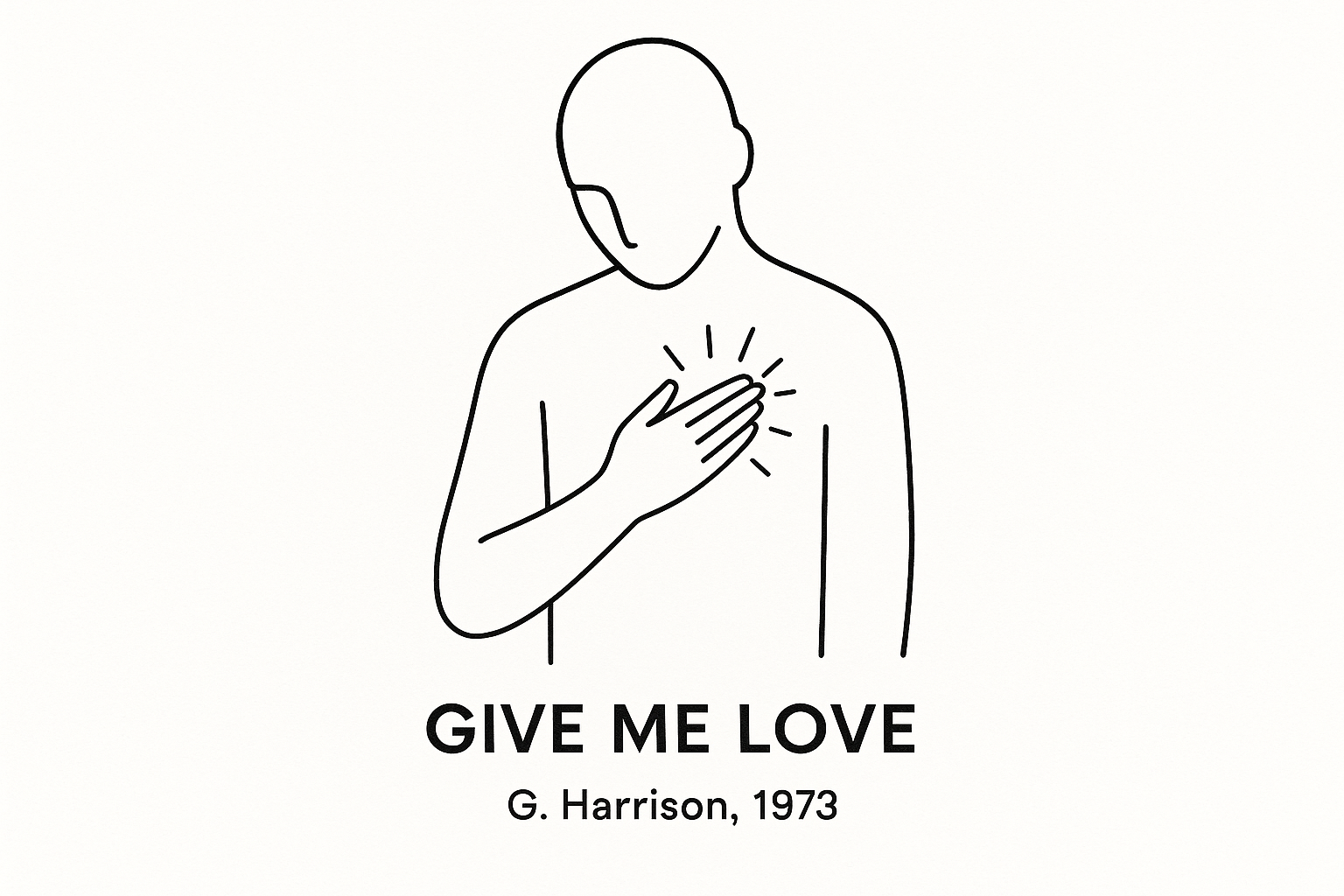
Peace in chaos requires asking for what you need. After the massive success of "My Sweet Lord," George could have chased another big production with orchestra, choir, and elaborate arrangements. Instead, he recorded this song in his home studio, keeping it intimate and sincere. Just his voice, his guitar, and the quiet plea of a man asking for what he needs: love and peace in a chaotic world.
Every line of the song expressed vulnerability. George poured his spiritual longing into this track, recorded during a period of personal struggles and professional pressures. He didn't hide behind metaphor or musical complexity. The directness of his ask, "give me love, give me peace on earth," reveals strength in acknowledging need rather than pretending self-sufficiency.
Audiences responded powerfully to his honesty. The song became his second US number one, proving that both his music and his message were well received by the public. In a music industry increasingly focused on spectacle, George chose simplicity. In a culture celebrating independence, he chose to express dependence.
Critics might have expected something grander from a former Beatle, but George never cared to be the loudest voice in the room; he pursued wisdom, not volume. Sometimes whispered truth cuts through noise more effectively than any shout.
Every heart recognizes authentic vulnerability when it hears it. George's willingness to simply ask for love, without pride or pretense, gave millions permission to admit their own needs. The song remains a testament to the power of honest expression.
Today, I will express one genuine need to someone I trust, understanding that asking for help is strength, not weakness.
What need have you been too proud to voice? How might honest vulnerability create the deeper connection you're actually seeking?
