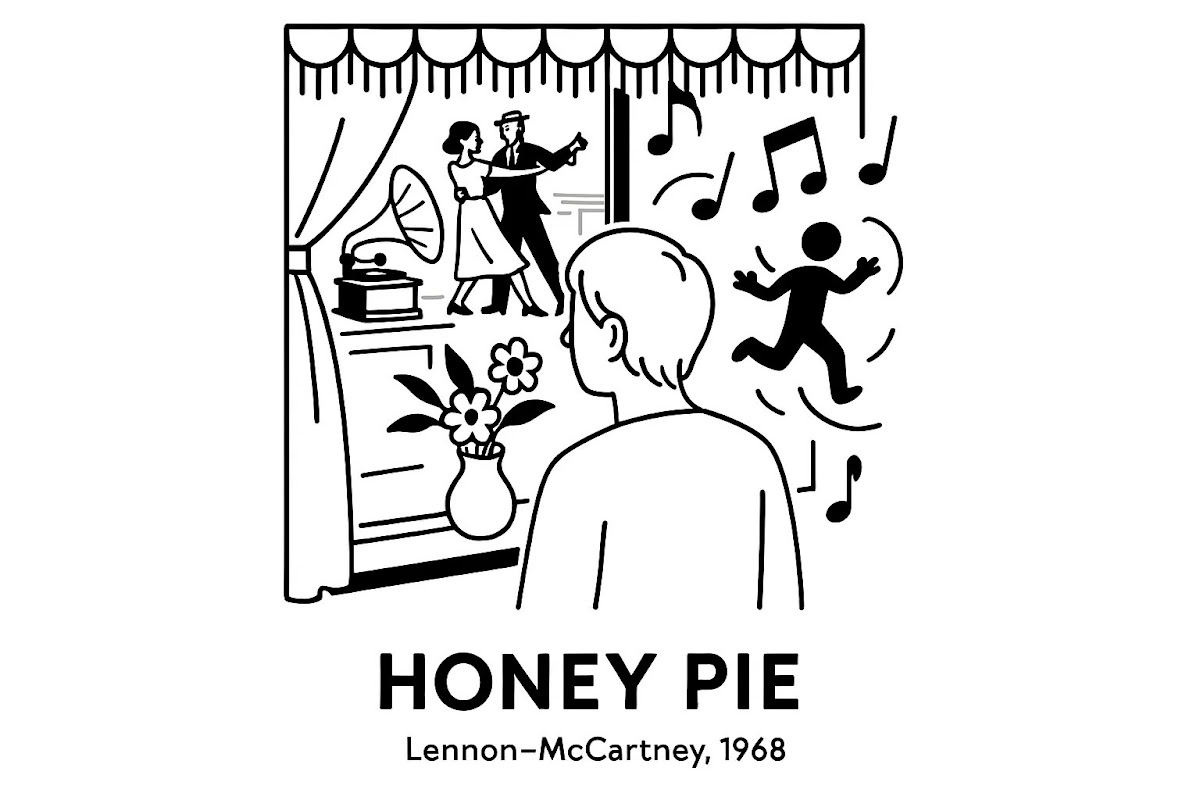
Honoring his father's generation, Paul took an unexpected detour in 1968 while The Beatles were revolutionizing rock music. "Honey Pie" from The White Album sounds like it belongs in a 1920s music hall rather than the psychedelic era, complete with vaudeville piano and nostalgic lyrics about a starlet of the silver screen.
One of Paul’s forays into “granny music” (as the other Beatles called it) this was a tribute to his father's generation and the entertainment traditions that shaped Paul’s musical training. Rather than rejecting the past to prove he was “hip”, Paul embraced it, creating something that honored earlier generations while showcasing his versatility as an artist.
Notably, the song demonstrates that innovation doesn't require abandoning the past. Paul's deep knowledge of pre-rock musical styles expanded his palette. By understanding ragtime, music hall, and vaudeville, he could draw from a richer well of possibilities.
Even modern leaders sometimes feel pressured to abandon tradition to prove their forward-thinking credentials. Paul's approach suggests that sustainable innovation comes from understanding and respecting the foundations others built, then using that wisdom to create something entirely new.
Yearning for connection with our roots, "Honey Pie" reminds us that honoring our predecessors doesn't make us old-fashioned; it makes us grounded. When we understand where we came from, we can move forward with both confidence and humility.
Today, I will identify one tradition or practice from previous generations that could inform and strengthen my current work, recognizing that innovation builds upon rather than destroys the past.
What wisdom from an earlier generation could enhance your current approach? How might honoring the past actually accelerate your progress toward the future?
