

THE WISDOM OF THE BEATLES
Be inspired by the most iconic band of our generation.
I Should Have Known Better
Trust the good feelings when they're real; not everything needs to be analyzed
May 22
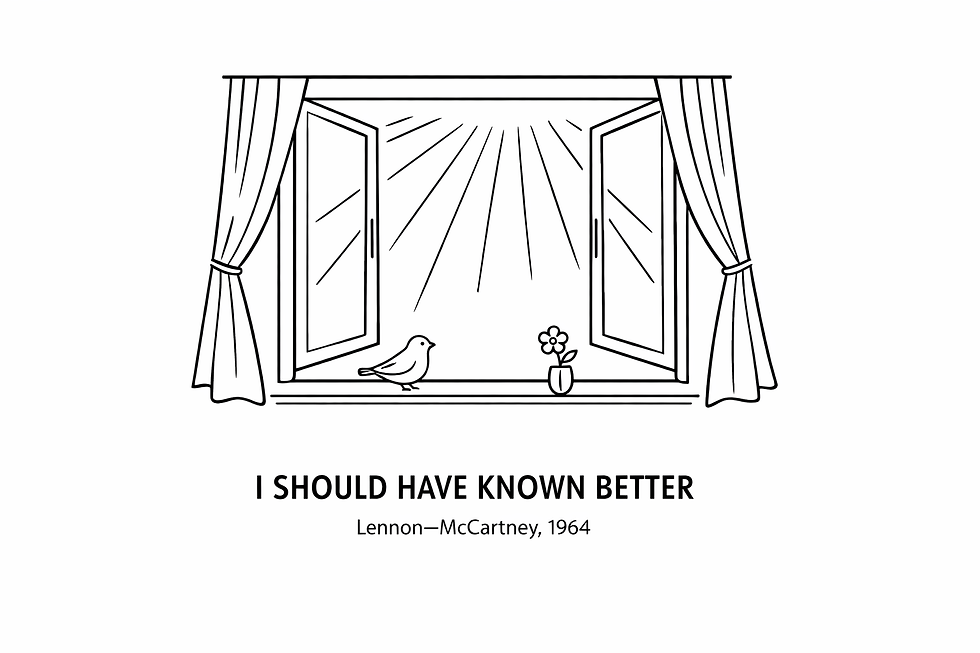
Grinning from the opening harmonica blast, "I Should Have Known Better" captures something the early Beatles did better than almost any band before or since: the pure, uncomplicated joy of falling in love without knowing what you were getting into. John opened A Hard Day's Night with this exuberant track, and the fact that he would later dismiss it as unimportant only makes it more interesting. Sometimes the things we create with the least self-consciousness are the ones that most honestly reveal who we are.
In the early days of falling for someone, before experience teaches us to protect ourselves with irony and analysis, love feels exactly like this song sounds: fast, warm, slightly breathless, more energy than sense. John was singing from inside that feeling, and it is entirely genuine. The harmonica does not philosophize. The melody does not interrogate its own happiness. It simply moves forward at full speed, which is exactly how that particular kind of joy moves through a person.
Reflection and analysis have their place in emotional life, but they have a way of arriving uninvited during moments that were not meant to be examined. One of the most underrated forms of emotional intelligence is knowing when to simply trust the good thing in front of you without subjecting it to a full audit. John's declaration in this song, which amounts to "I should have known all along how good this was," is a reminder that some discoveries only reveal themselves fully in the living of them.
Looking back from across decades of much more complicated work, "I Should Have Known Better" stands out precisely because of what it is not: cautious, guarded, qualified, or sophisticated. It is just a song about joy. And in a catalog filled with profound complexity, that uncomplicated happiness is its own kind of wisdom.
Today, I will allow myself to experience one simple joy without analyzing or qualifying it, trusting that not every good feeling needs to be earned through examination.
Where in your life have you been overthinking something that might simply be a genuine good thing? What would it mean to trust the feeling rather than interrogating it?
Join April's New Beginnings Lessons
When George Harrison walked out of a contentious business meeting in 1969 and into Eric Clapton's garden, he discovered the strategic power of renewal. The song he wrote that afternoon, "Here Comes the Sun," would become The Beatles' most-streamed track and a masterclass in navigating transitions. Throughout April, we'll explore how their approach to new beginnings, strategic retreats, and turning endings into opportunities provides actionable frameworks for leaders navigating organizational transitions, career pivots, and transforming uncertainty into growth in every area of life.
Are you looking for deeper learning? Check out the full post for a 15 minute read.