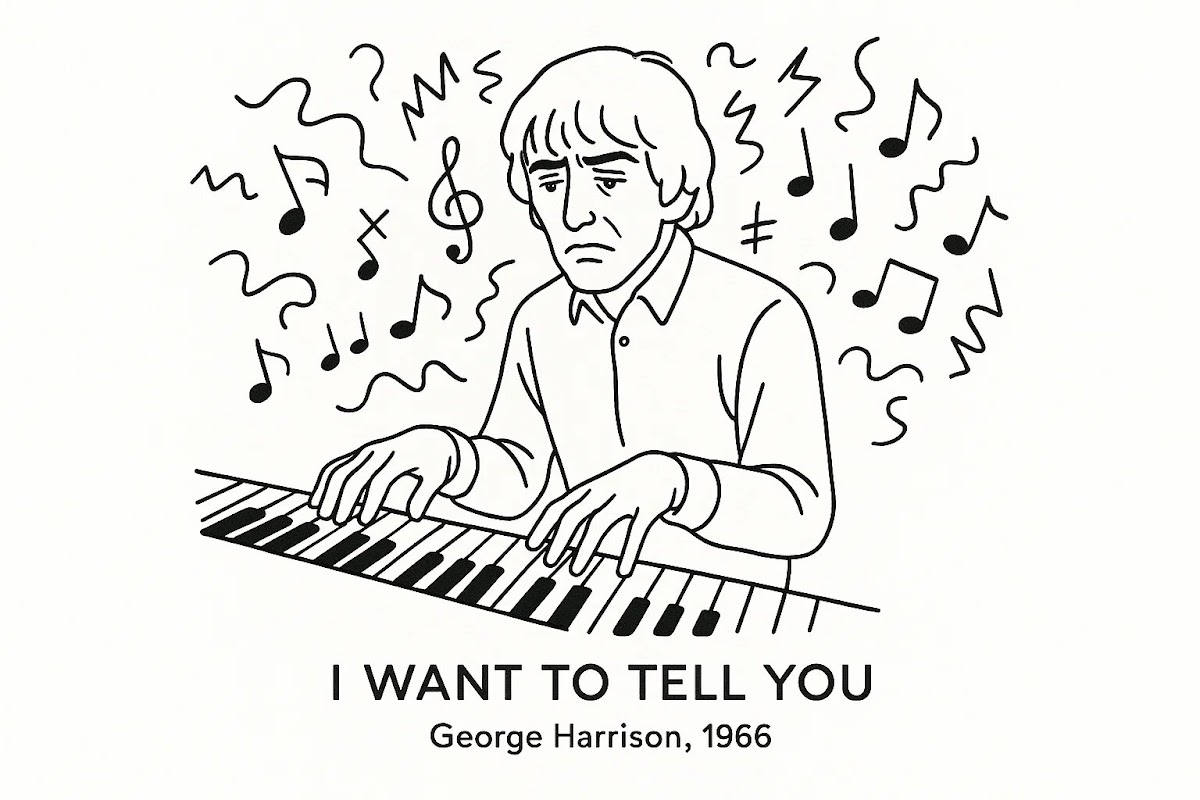
When George wrote "I Want to Tell You" for The Beatles' album "Revolver," he was grappling with a fundamentally human struggle: the difficulty of expressing what's truly in our hearts and minds. Released in August 1966, this often-overlooked gem reflects on the gap between what we feel and what we're able to articulate.
This song emerged during a period of tremendous personal and creative growth for George. At this point in The Beatles' journey, he was expanding his philosophical horizons through his interest in Eastern spirituality. He was also asserting himself more forcefully as a songwriter within the group.
The song's structure brilliantly mirrors its content. The dissonant piano chord that repeats throughout creates a sense of tension, capturing the frustration of struggling to find the right words. This musical approach highlights one of George's greatest gifts: his ability to make the form of a song reflect its meaning.
We live in an age of unprecedented connectivity yet persistent misunderstandings. The paradox of modern life is that we have more channels for expression than ever before yet many of us feel increasingly misunderstood. Like George, we often "want to tell" something important but struggle to find the words to express what we intend.
Today, I will recognize when I'm struggling to express something important and approach those conversations with greater patience and awareness.
With whom do you find communication flows most naturally, and with whom is it more challenging? What practices might help bridge the gap when you have something important to express but struggle to find the right words?
