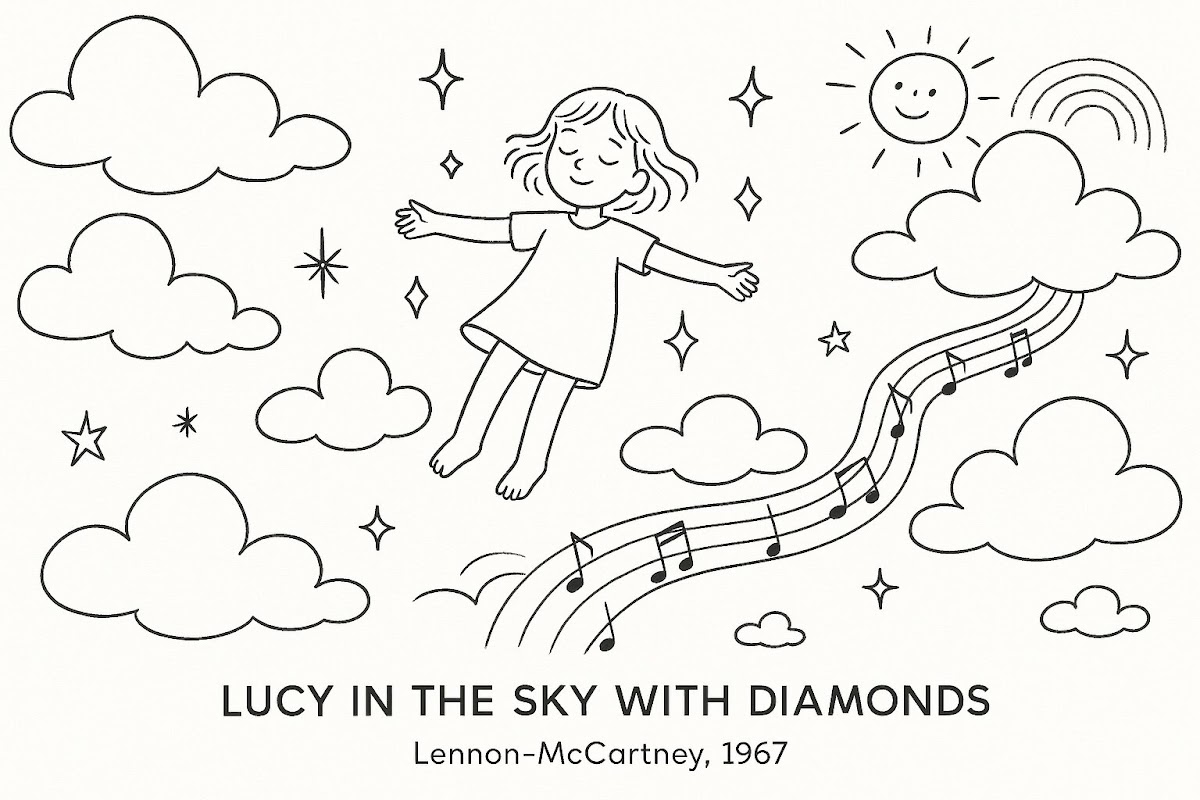
Looking at his four-year-old son's artwork, John found inspiration in an unexpected place. When Julian brought home a drawing of his classmate Lucy floating in a starry sky, John didn't see childish scribbles, he saw pure imagination unleashed. That innocent artwork became the focus of one of The Beatles' most psychedelic masterpieces.
Unlike adults who often dismiss children's fantastical ideas as "unrealistic," John embraced the boundless creativity of his son's vision. Despite persistent rumors connecting the song to LSD, John always maintained it was about the wonder Julian saw in his everyday world, a world where friends could float among diamonds in the sky.
Childhood imagination operates without the constraints that limit adult thinking. Four-year-olds don't question whether someone can float in the sky. This uninhibited creativity is exactly what fueled John and Paul's collaboration on the dreamlike soundscape that brought Julian's vision to life.
Yet somewhere along the way, many of us learn to suppress our imaginative impulses. We're taught to be "realistic," to color inside the lines, to stop believing in impossible things. When we retain that childlike ability to see beyond conventional limitations, we open ourselves to possibilities that logical thinking alone could never discover.
Today, I will approach one challenge with the unbounded imagination of a child, asking "What if?"
What dreams have you dismissed as "unrealistic" that might be pointing toward your next breakthrough? How could viewing your current situation through a child's eyes reveal new possibilities?
