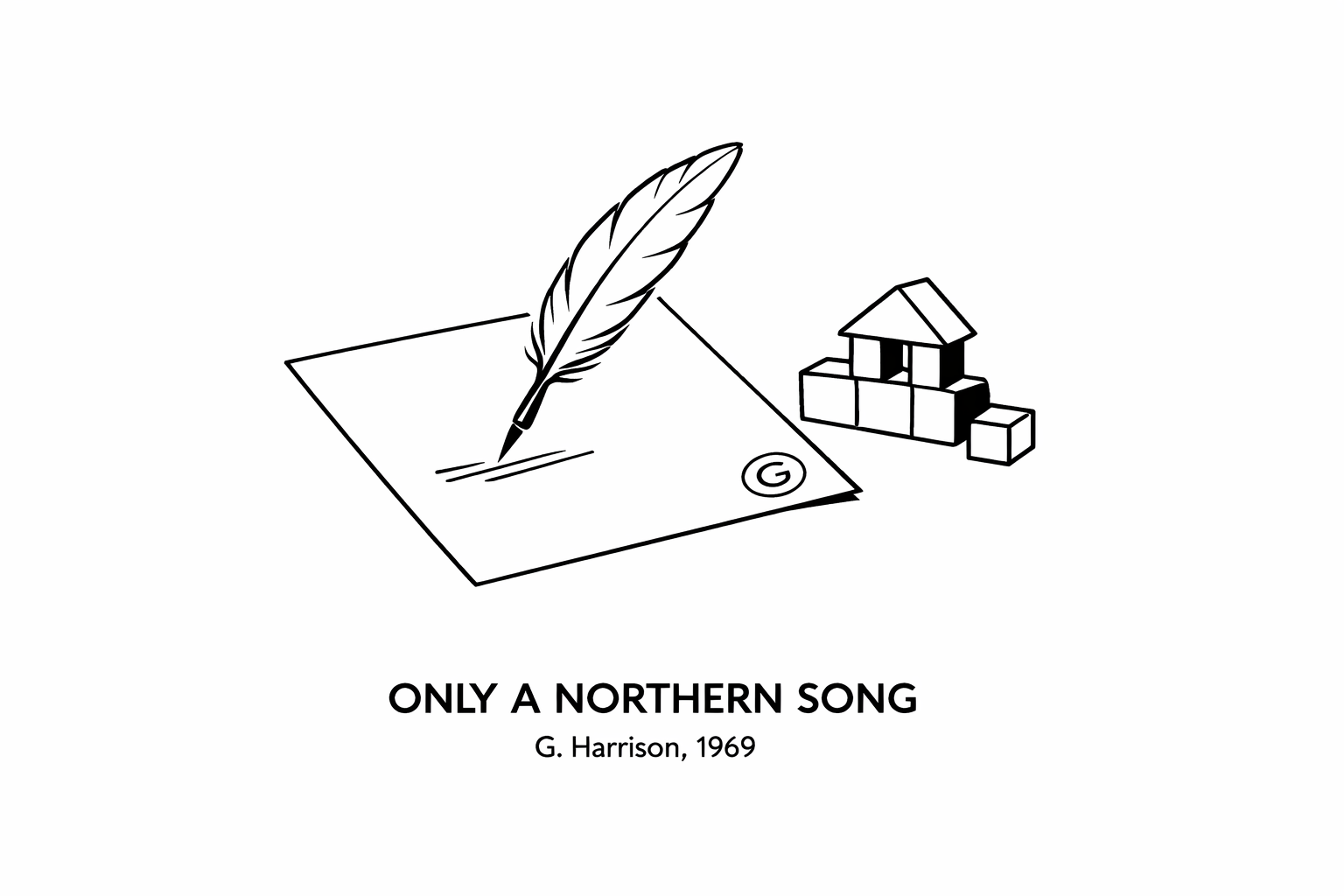
Silence in the face of injustice breeds resentment and rarely stays silent for long. George spent years under a publishing arrangement that cost him a fortune in royalties. The Beatles' original deal with Northern Songs was particularly painful for George and Ringo, who received less than one percent of royalties even on songs George had written entirely himself. Rather than simply absorbing that frustration, he wrote it into a song and put it on the Yellow Submarine soundtrack. Even his complaints became art.
Our culture tends to send mixed messages about expressing grievance. On one hand, we are told not to complain. On the other, we know from experience that unexpressed resentment does not disappear. George's approach was neither passive nor destructive: he named the injustice clearly, wrapped it in sardonic humor, and moved on.
No creative person should let a bad deal define their creative output. While writing a song about the absurdity of his contractual situation, he was already laying the groundwork to escape it. He formed his own publishing company, Harrisongs, before the White Album, which meant that from that point forward, every song he wrote was protected by an arrangement he controlled.
Giving voice to unfairness, even in an artistic way, is one of the healthier ways a person can express a genuine grievance. "Only a Northern Song" is a reminder that you do not have to choose between suffering in silence and burning everything down. Sometimes the most effective response to an unfair situation is to name it clearly, laugh at the absurdity, and then quietly build a better arrangement.
Today, I will name one frustration that I have been carrying silently, expressing it in a constructive way rather than allowing it to continue building pressure below the surface.
What legitimate grievance have you been sitting on because expressing it felt inappropriate? How might naming it honestly, even imperfectly, create more room for resolution than silence has?
