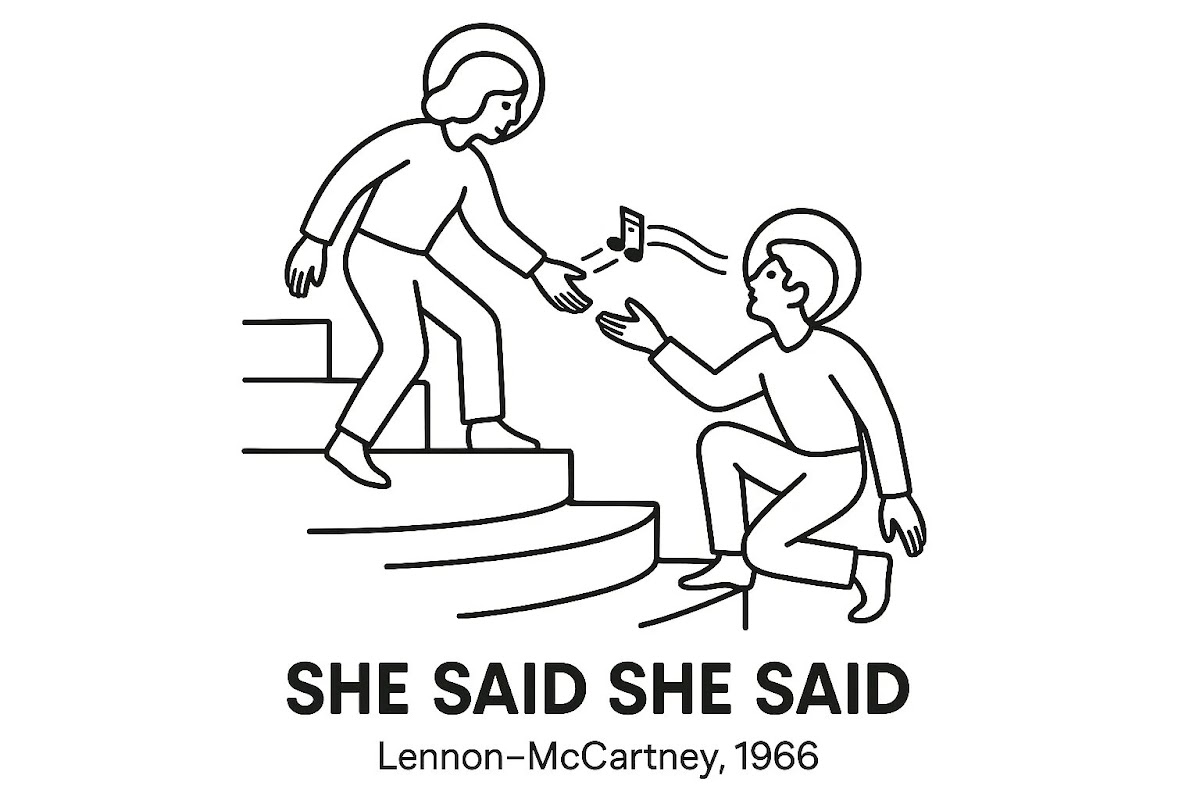
During a party in California with Hollywood stars, Peter Fonda made an unsettling comment to John about knowing what it's like to be dead. This bizarre conversation at a gathering influenced by psychedelic experiences could have remained just another strange encounter, but John transformed it into "She Said She Said," from the Revolver album.
Emerging from this abstract experience, John was inspired to create a reflection on life and death. Instead of dismissing Fonda's cryptic comment or writing it off as drug-induced rambling, John found a way to explore the deeper emotional territory of feeling disconnected from life.
After several years and a catalog full of songs about young love, The Beatles deepened and broadened their art for the Rubber Soul album. The immediate follow-up, Revolver, took it one step further. Revolver includes themes of consciousness, drugs, taxes, life and death.
Death or dying is mentioned in the lyrics of seven of the songs on Revolver, and it is a dominant theme in four of them. This is a dramatic change from "I Want To Hold Your Hand" and "She Loves You." "She Said She Said" demonstrates how creative interpretation can transform flippant comments into meaningful reflection on life and death.
Today, I will listen for the emotion behind someone's words rather than focusing only on their literal meaning.
When has someone tried to share something important with you that you initially dismissed? How might meeting people where they are emotionally create deeper connections?
