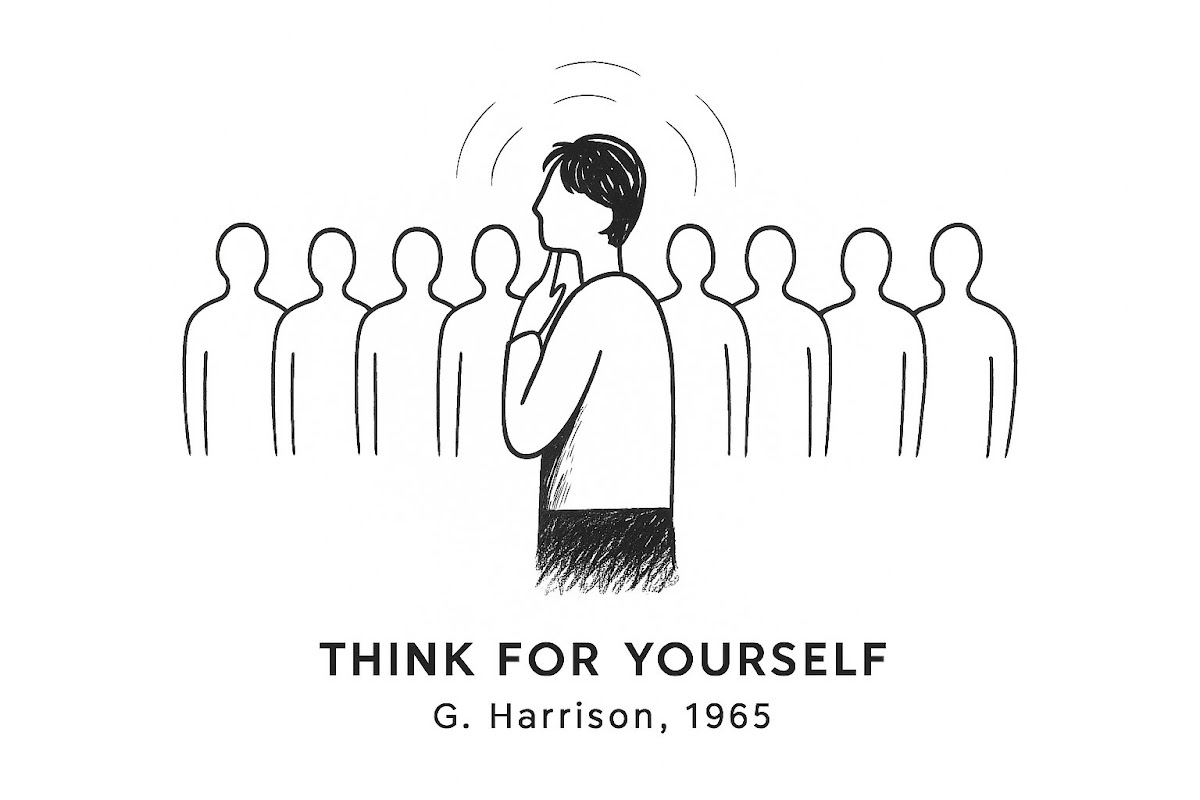
"Think for Yourself", from Rubber Soul, shows George’s continued growth as a songwriter. The song's rebellious spirit matched its unique sound. Paul's distorted bass line created a fuzzy texture that perfectly captured the track's anti-establishment message. Written during George’s exploration of Indian philosophy, he challenged listeners to question materialism and blind conformity.
He was frustrated by people who mindlessly followed leaders without thinking for themselves. This 1965 track represented his growing confidence to voice philosophical challenges. For George, questioning authority was an essential part of maturing.
In today’s information world, the message feels especially urgent. Political correctness and cancel culture create pressure to adopt popular opinions without critical examination. Like the distorted bass line, external noise often blocks our ability to focus on our own beliefs.
Navigating today's challenges requires the courage George championed. Partisan leadership attempts to focus on what’s wrong with the other side. George encourages you to “Think For Yourself.”
Knowing when to question and when to trust develops through practice. Intellectual independence is about engaging our critical thinking before accepting direction, no matter how popular the source.
Today, I will question one widely accepted belief or practice in my field, examining whether I follow it from understanding or merely from convention.
What popular opinion have you accepted without truly examining? Where might your independent thinking lead to breakthrough insights others are missing?
