top of page
paper

THE WISDOM OF THE BEATLES

Be the first to be inspired by the most iconic band of our generation.
Untitled_edited_edited.jpg

Eleanor Rigby Story: Serendipity at St. Peter's Church

  • Apr 16
  • 4 min read

The Eleanor Rigby story begins with one of the most haunting songs in music history. Released in 1966 on Revolver, the track tells of a lonely woman who "died in the church and was buried along with her name." What makes this story extraordinary is what lies in the cemetery at St. Peter's Church near Liverpool, the very place where John and Paul first met on July 6, 1957. There, a tombstone bears the name Eleanor Rigby. Paul insists he made up the name. The coincidence remains striking.


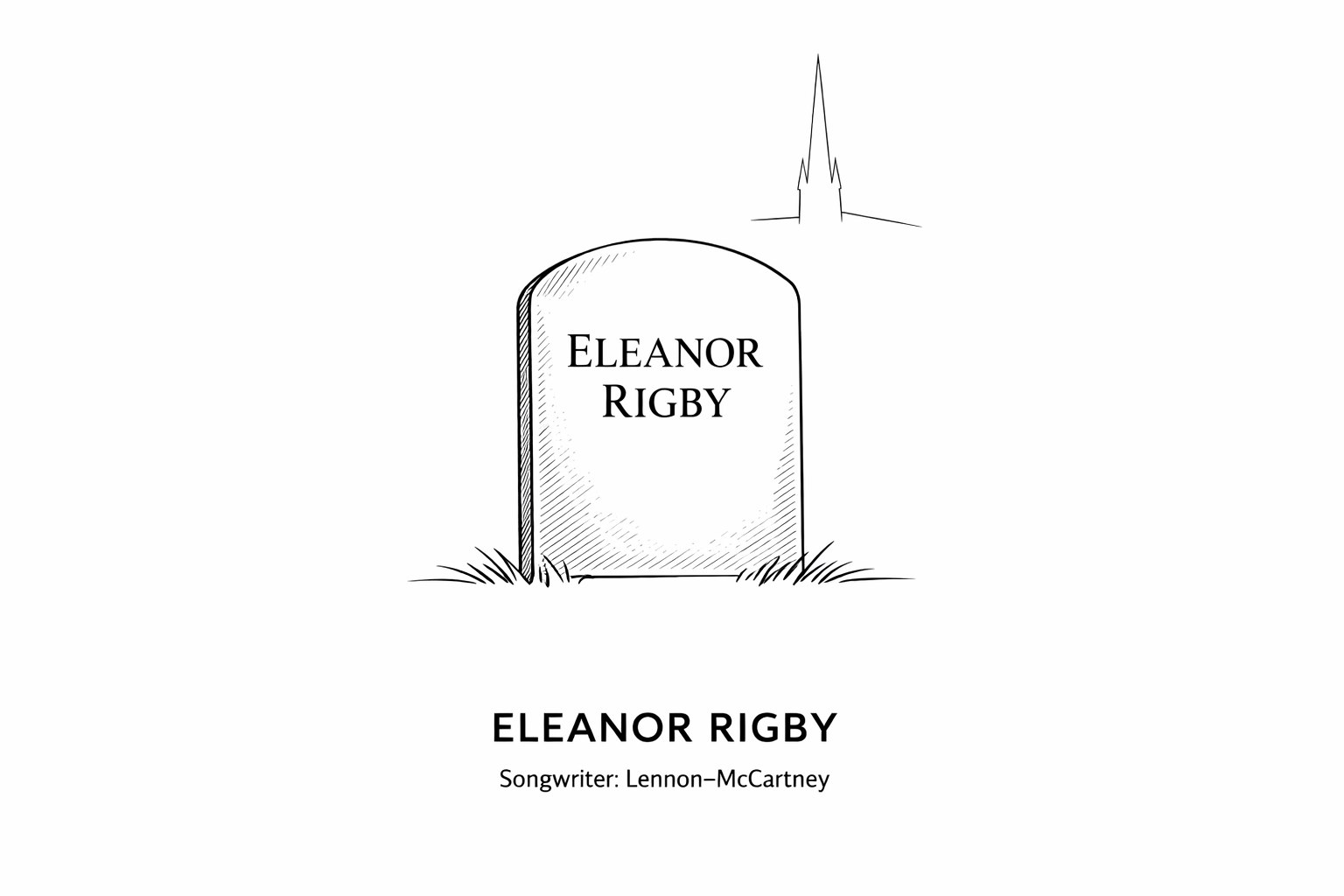
Black and white line art of Eleanor Rigby tombstone with St. Peter's Church spire, vintage 1960s poster aesthetic

The Meeting Place

St. Peter's Church in Woolton served as the backdrop for one of music's most fateful encounters. On that summer day in 1957, the Quarrymen played at the village fete while fifteen-year-old Paul watched seventeen-year-old John perform. The band played on the school grounds directly behind the church, and both young musicians would regularly take shortcuts through the church grounds in their early days. Nine years later, Paul would immortalize that location in a song about loneliness and forgotten lives.


The first recording session for "Eleanor Rigby" took place on April 28, 1966, at Abbey Road's Studio Two. A string octet performed a score written by George Martin, with four violins, two violas, and two cellos. Neither John nor Paul played instruments on the track. The session ran from 5pm to 7:50pm, with fourteen takes recorded.


The Discovery

The gravestone was discovered in the 1980s, bearing the name Eleanor Rigby. The actual Eleanor Rigby was born in 1895, lived in Liverpool, worked as a scullery maid, married Thomas Woods, and died on October 10, 1939, at age 44. The tombstone sits in the second row facing the street, just to the right of the cemetery's center walkway.


Paul's explanation for the name has remained consistent. He originally called his character Miss Daisy Hawkins. Paul said he possibly got "Eleanor" from actress Eleanor Bron, who starred with the band in their 1965 film Help!, and "Rigby" came from a store in Bristol called Rigby & Evens Ltd. He later suggested that perhaps he had a subconscious memory of the tombstone, possibly having seen it while walking through the cemetery.


The Song's Impact

On August 5, 1966, "Eleanor Rigby" was simultaneously released on a double A-side single with "Yellow Submarine" and on the Revolver album. The single entered the UK charts on August 11, 1966, hit number one seven days later, and spent 13 weeks in the charts. In the United States, it peaked at number 11 on the Billboard Hot 100.


The string arrangement broke new ground. Engineer Geoff Emerick miked the strings very close, almost touching them, a technique no one had really done before. Paul wanted a "really biting" sound, not the smooth legato style of "Yesterday." George Martin drew inspiration from Bernard Herrmann's score for the film Fahrenheit 451, particularly the strident string writing.


The Subconscious Question

Whether Paul consciously borrowed the name remains unanswered. In 2008, a document surfaced showing Paul owned Eleanor Rigby's signature on a wages list, which he had sent to someone knowing its potential value. The document sold at auction for £115,000. Yet in 2017, when deeds to Eleanor Rigby's grave went up for auction, Paul again claimed Eleanor Rigby was a totally fictitious character.

The lyrics place Eleanor at a church where she both picks up rice after a wedding and is eventually buried. The same church where John and Paul met. The same church where a real Eleanor Rigby lies buried. Coincidence or subconscious memory? The answer matters less than what the story reveals about how creativity works.


The Legacy

Due to the inspiration of the song, Eleanor Rigby's tombstone has become a popular landmark for Beatles fans visiting Liverpool. On December 3, 1982, a bronze statue of Eleanor Rigby was unveiled at the side of the MET Quarter, made by entertainer Tommy Steele, dedicated to "All the lonely people".


The real Eleanor Rigby worked at City Hospital in Liverpool, not far from the song's depiction of someone who cleans in churches. She married late by the standards of her time, at age 35. She lived her entire life in Woolton and died of a brain hemorrhage at 44. Whether Paul knew her story consciously or not, his song gave her immortality she never found in life.


MINI-FAQ

Q: What is the Eleanor Rigby story about?

The Eleanor Rigby story centers on a 1966 song by Paul about a lonely woman who dies in a church. A real Eleanor Rigby is buried at St. Peter's Church, Woolton, the exact location where John and Paul first met in 1957, creating a remarkable coincidence.


Q: Where is Eleanor Rigby buried?

Eleanor Rigby is buried in the cemetery at St. Peter's Church in Woolton, Liverpool. Her gravestone was discovered in the 1980s and has since become a pilgrimage site for fans.


Q: Did Paul know about the real Eleanor Rigby?

Paul insists he made up the name, combining "Eleanor" from actress Eleanor Bron and "Rigby" from a Bristol store. He later suggested he might have had a subconscious memory of seeing the tombstone while walking through the cemetery.


Q: When was Eleanor Rigby recorded?

"Eleanor Rigby" was recorded at Abbey Road on April 28-29 and June 6, 1966. The string octet backing was recorded on April 28 in a session that ran from 5pm to 7:50pm.


Q: How successful was Eleanor Rigby as a single?

Released on August 5, 1966, "Eleanor Rigby" reached number one in the UK and spent 13 weeks on the charts. In the United States, it peaked at number 11 on the Billboard Hot 100.


HOW THIS CONNECTS

This remarkable coincidence reminds us that new beginnings often emerge from unexpected sources. The chance meeting at St. Peter's Church in 1957 led to one of history's greatest songwriting partnerships, and nine years later, that same location echoed through one of their most enduring works. For more on finding hope in unexpected moments, explore our April 2026 collection on new beginnings. You can also discover daily wisdom inspired by moments like these on our Daily Words of Wisdom page. To learn more about how serendipity shaped creative partnerships, visit Dan Absher's books.


LISTEN & LEARN

Comments


Come Together with The Fab Four Community

Join the Fab Four Community to get exclusive previews and early-bird offers.

bottom of page